


When “We’ve Always Done It This Way” Becomes A Mission Statement
Every church has traditions, and many of them are worth keeping. The problem comes when preserving familiar practices quietly becomes the mission itself. Healthy churches learn to hold Scripture tightly, meaningful traditions thoughtfully, and preferences loosely so they can stay faithful to their mission without losing their identity.

If Everyone Needs You, You May Be Leading Wrong
Being needed can feel like proof that ministry is going well, but a church that depends on the pastor for every decision, every conflict, and every ministry detail may not be healthy. Effective pastoral leadership equips others, shares responsibility, and builds a church that can carry ministry together rather than routing everything through one person.

The Difference Between a Declining Church and a Dying Church
Church decline can show up in attendance, finances, aging membership, and struggling ministries, but those signs alone do not determine a church’s future. The deeper issue is whether the church still has the capacity and willingness to respond. Honest assessment can help churches distinguish between a difficult season of decline and a deeper movement toward closure.
Why a Pastor-Church Covenant Matters When Calling a New Pastor
Calling a new pastor involves more than finding the right candidate. A pastor-church covenant helps both the pastor and congregation clearly state how they intend to serve, lead, communicate, and care for one another as they begin ministry together.

You Don’t Have to Be the Best Leader in the Room
Good pastoral leadership does not mean being the smartest person in every conversation. Churches are stronger when pastors recognize the gifts and expertise around them, invite strong leaders into the process, and create room for others to contribute.

Your Church Needs You Healthy, Not Just Available
Pastors are good at finding reasons to neglect their own health. There is always another meeting, hospital visit, sermon, or crisis. But physical health affects the way we lead, preach, think, and relate to people, and taking care of our bodies is part of faithful stewardship.

Unspoken Expectations: A Hidden Source of Pastor-Church Conflict
Many churches and pastors never clearly discuss how leadership is supposed to function before the pastor arrives. Expectations about authority, committees, deacons, decision-making, and communication are often assumed instead of explained. That lack of clarity creates frustration, conflict, and disappointment on both sides.

Why Churches Feel Disconnected From Their Community
Churches often assume they know their community, but familiarity is not the same as connection. As lifestyles have shifted, many churches have become present geographically but distant relationally. Rebuilding that connection requires consistent presence, real conversations, and intentional engagement in the places where people already live and gather.

Why Churches Keep Fighting the Wrong Battles
Most churches are not fighting over doctrine or the gospel. They are fighting over preferences, traditions, and control, but treating those issues as if they carry greater weight. Without clarity, every disagreement becomes a battle. Healthy churches learn to distinguish between conviction and preference, allowing them to focus their energy on what actually moves the mission forward.

When the Church Stopped Being the Community’s Third Place
For much of the twentieth century, churches functioned as central gathering places in their communities. As social patterns changed, churches quietly lost their role as the default “third place” where relationships form. Many congregations still operate with assumptions from that earlier era. Revitalization begins with recognizing how community life actually forms today and engaging people within those patterns.

The Cost of Avoiding Hard Conversations in a Church
Churches that avoid hard conversations often create deeper problems over time. Issues that are not addressed do not disappear. They settle into the culture, weaken trust, and shape decision-making. Healthy churches deal with tension early and honestly, understanding that short-term discomfort prevents long-term dysfunction.

Why Revitalization Requires Letting Go of Something
Revitalization is not just about doing more. Churches often try to add new strategies without removing old patterns, which leads to confusion and fatigue. Healthy renewal requires honest evaluation and the willingness to release what no longer serves the mission so the church can move forward with clarity and alignment.

Are We Leading With Intention or Just Reacting?
Many churches stay busy but struggle to move forward because their leadership is reactive instead of intentional. Reactive leadership responds to problems, complaints, and new ideas without a clear sense of direction. Intentional leadership focuses on Christ’s mission and makes decisions that consistently move the church toward that mission with clarity and patience.

Why Churches Do Not Realize They Are in Decline
Church decline rarely happens overnight. It usually unfolds slowly enough that congregations do not notice it until the church has already stalled or plateaued. Because decline happens gradually, churches often compare their present situation to past memories instead of current reality. Healthy revitalization begins when a church honestly recognizes where it is and begins seeking the Lord for a path forward.

What Church Revitalization Really Is
Church revitalization is not about rebranding a church or copying someone else’s strategy. It begins with discovering the cause of a church’s stall, plateau, or decline and then prayerfully shepherding the congregation to understand the issue and take biblical steps toward health. Healthy revitalization usually unfolds in three movements: diagnosing the real problem, helping the church see it clearly, and leading the congregation toward faithful correction without blowing everything up.

The Hidden Cost of Avoiding Conflict in the Church
Churches rarely decline because of one big fight. More often, they decline because leaders avoid hard conversations. When difficult personalities are coddled instead of confronted and real issues stay unaddressed, trust erodes and mission slows. Healthy churches are not conflict free. They are honest.
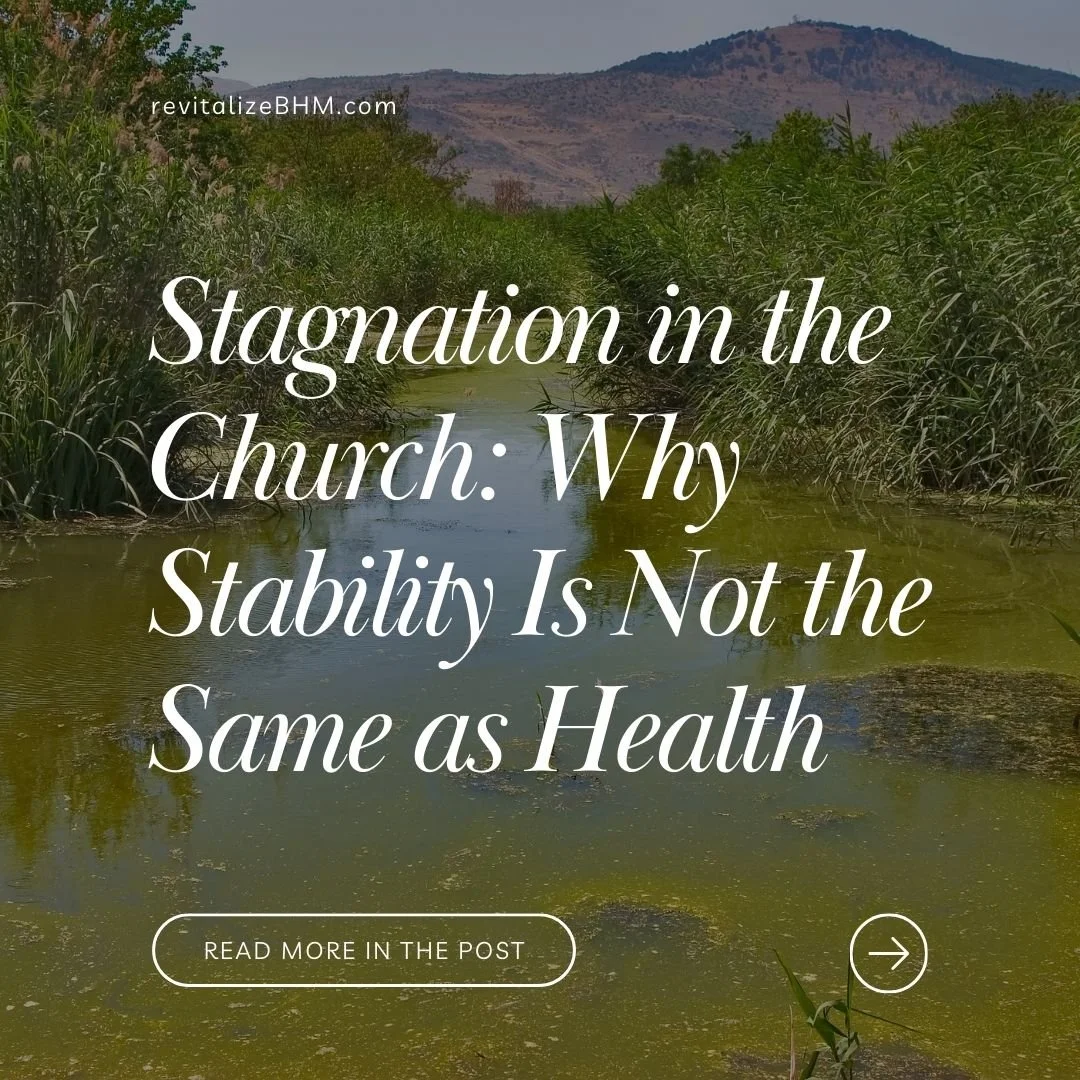
Stagnation in the Church: Why Stability Is Not the Same as Health
A church can be stable and still be stagnant. Balanced budgets and predictable attendance do not prove health. If nothing is growing, developing, or moving forward, stability may be masking quiet decline. Healthy churches show signs of life: new leaders, honest evaluation, and mission-driven progress.

Why Honest Communication Matters in a Pastor Search
Pastor searches require more than polished language and generic descriptions. Churches should communicate clearly about their health, expectations, financial realities, and culture. Alignment begins with honesty. When a church describes who it truly is instead of who it wishes to be, it protects both the congregation and the next pastor from unnecessary tension.

Your Church Isn’t Friendly. It’s Familiar
Most churches confuse friendliness with familiarity. Being warm with those you already know is easy, but real hospitality welcomes those who feel unseen. True friendliness means noticing, inviting, and including people who are new so that no one stands alone.

10 Unique Questions to Ask a Potential Pastor
Most pastor search committees ask questions that reveal style, not substance. These ten unique questions go deeper, uncovering humility, emotional health, and spiritual chemistry. The right questions don’t just identify the right pastor—they help the church rediscover who it is.